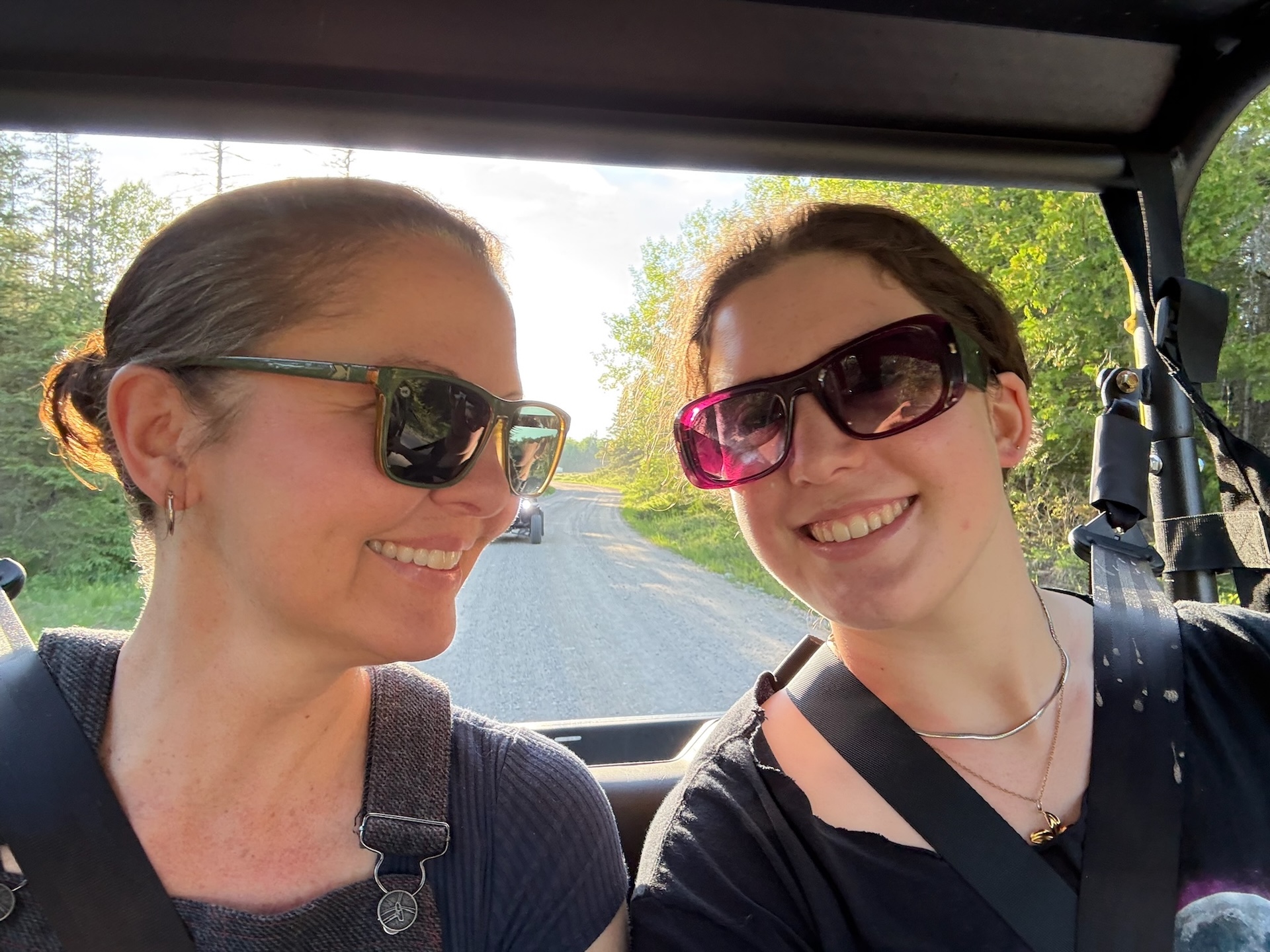
As our fourth season of owning and operating Northern Properties draws to a close, Karen and Amy want to thank our friends, both on and off the island, for your continued support. It has been a year of growth, change, and many firsts.
During this time, we have used our blog and social media accounts to celebrate successes, relationships, milestones, and the work of other island organizations and businesses. In this same spirit of sharing, there is one organization Amy has become personally involved with that she would like to take a moment to introduce—not simply by describing what it does, but by sharing the experiences that led her to become involved.
More Than One Trail Forward
An Update From Amy
When I moved to Drummond Island four years ago as a new business owner, I knew I had plenty to learn. I expected lessons about ferry schedules, vacation rentals, island directions and what “the island wave” means around here. What I did not expect was to become involved in a years-long discussion about off-road trails, grant-funded projects, public land and how decisions affecting recreation are made.
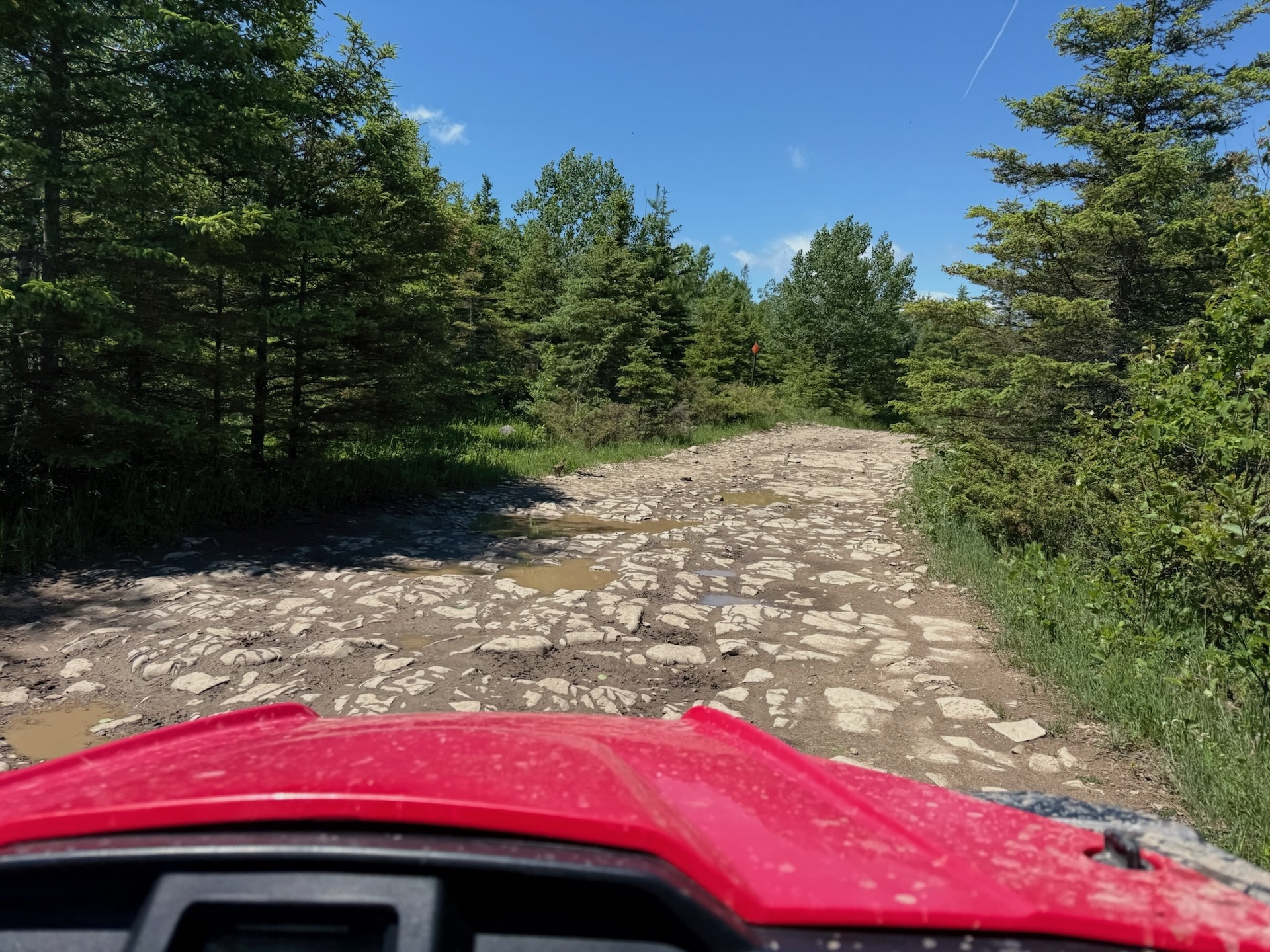
The island’s off-road trails are more than lines on a map. They lead to favorite overlooks, family traditions, muddy adventures and stories that improve every time they are told around a campfire. They provide access to public land and bring visitors who support local businesses, including ours. Because I was involved with both the island’s tourism association and the local off-road organization, I initially saw opportunities to help. I believed that asking questions, organizing information and inviting more people into the conversation could support the work already being done.
Instead, I gradually found myself at the intersection of several organizations, each with its own history, relationships, responsibilities and ideas about how trail decisions should be made. On an island, four years still makes you a newcomer, and newcomers do not always recognize the invisible lines until they accidentally step across one.
The experience has been humbling. I have made mistakes, learned when clearer labels and better communication were needed, and discovered that good intentions do not always translate into clear processes. I have also learned how quickly questions about a process can be interpreted as criticism of the people involved. At the same time, I have seen how much knowledge, energy and generosity exist within this community, and that is why I remain hopeful that longtime residents, newer business owners, visitors, volunteers and trail users can all have a place in the conversation without anyone feeling that another person’s involvement diminishes their own.
The Backstory
For years, the island’s tourism and trail-management organizations have played important roles in supporting off-road recreation on Drummond Island. The organization responsible for administering state trail grants carries a significant responsibility. That work includes entering into agreements with the state, administering approved funding, coordinating eligible maintenance and projects, maintaining records and ensuring that grant-supported work complies with state requirements.
That role matters, but administering a grant is not the same thing as owning the trails or owning the public conversation surrounding them. Drummond Island’s state lands belong to the public, and the people who ride the trails, maintain them, visit them, live near them, rely on them economically or care about their environmental condition all bring useful perspectives. The challenge is figuring out how those perspectives fit alongside formal authority.
That question became especially important after the controversy surrounding Marble Head. The lesson I took from Marble Head was not simply that people disagreed about a trail project. It was that public-land decisions are better when communication is clear, roles are understood, information is documented and people know how to participate before a project becomes controversial.
The confusion that followed Marble Head also exposed a larger problem: people did not always understand which organization had been consulted, who represented trail users, where formal authority rested or how members of the public could meaningfully participate. That experience eventually helped lead to the creation of the Drummond Island Off-Road Alliance, or DIORA.
Creating Another Way to Participate
In 2025, I helped form DIORA as an independent, member-based organization for people interested in off-road recreation, public-land stewardship and the future of the island’s trail system. DIORA was created to provide another way for people to participate through stewardship, education, advocacy, documentation, volunteer service and the development of project recommendations.
DIORA does not administer the island’s established state trail grants, direct another organization’s contractors, approve grant-funded projects or spend another organization’s grant money. Those responsibilities remain with the organization holding the grant agreement. DIORA’s role is different. We can document trail conditions, identify maintenance concerns, educate trail users, encourage responsible recreation, communicate with public agencies, research public-land issues, suggest improvements and advocate for responsible access and stewardship.
Some of our early forms, titles and proposed assignments were not as clear as they should have been and could have created confusion about DIORA’s role. We acknowledged that and made corrections. Clear labels and clearly defined responsibilities matter, especially when multiple organizations care about the same trail system but do not share the same legal authority.
Over the past year, I have also come to understand something more clearly: DIORA does not need to possess formal trail-management authority in order to have a legitimate role. Nor does another private organization need to approve DIORA’s existence before its members can document public-land conditions, ask questions, communicate with agencies, advocate for responsible recreation or offer recommendations.
That distinction has become increasingly important.
When Cooperation Becomes Complicated
When DIORA was formed, I genuinely hoped the various organizations involved in tourism, trail management and trail advocacy could work closely together. For a time, that seemed possible. As DIORA grew, however, disagreements emerged about organizational structure, access to information, representation, volunteer involvement and the line between making recommendations and exercising formal authority.
During 2026, attempts to establish a cooperative relationship increasingly gave way to mistrust. Some viewed DIORA’s questions, documentation and recommendations as duplication or interference, while DIORA members sometimes viewed limited communication and centralized decision-making as making meaningful participation more difficult.
Once trust starts to erode, nearly everything becomes harder. A question can sound like an accusation, a recommendation can feel like a challenge to authority and a correction can feel personal. People who ultimately want many of the same things can begin treating one another as though they are on opposing sides.
I have come to believe that this is where everyone involved has to be careful. The fairest version of this story does not have heroes on one side and villains on the other. It has passionate people who care deeply about the same island and who developed very different ideas about process, structure, authority and participation.
The disagreements are real, and legitimate questions remain about communication, transparency and organizational decisions. But reducing the entire situation to good people versus bad people would miss the larger lesson.
Independence Does Not Mean Opposition
One of the most important things I have learned is that cooperation and independence are not opposites. Different organizations can have different roles, pursue separate projects, communicate directly with public agencies and advocate for different priorities while still working together when circumstances allow.
DIORA does not need to replace the established trail-management organization, and the established trail-management organization does not need to control DIORA. Each can operate within its own lane. One organization may administer grants and approved trail work, while another focuses on public participation, education, stewardship, documentation and advocacy.
Those roles can coexist. That realization has helped me step away from the idea that success requires everyone to agree, operate under the same structure or maintain a formal working relationship. Cooperation is valuable, but it cannot always be forced. Sometimes collaboration means working side by side, and sometimes it simply means respecting one another’s boundaries while continuing to work toward many of the same larger goals.
Safe, sustainable trails, responsible recreation, environmental stewardship, public access and a healthy island economy are not goals that belong exclusively to any one organization.
Accountability Applies to Us Too
I also believe strongly that accountability cannot be something we demand only from other people or organizations. DIORA is still young, and we have made mistakes. There have been times when our communication could have been clearer, when enthusiasm moved faster than process and when we could have done a better job distinguishing a volunteer recommendation from an official project or organizational decision.
Those lessons matter. If we expect transparency from others, we have to practice it ourselves. If we expect factual accuracy from others, we have to correct ourselves when we get something wrong. If we want people to listen to our concerns, we also have to be willing to hear criticism of our own organization.
That does not mean abandoning our mission when someone disagrees with us. It means carrying out that mission responsibly and being willing to learn as we go.
People Are Not Organizations
Another lesson has become increasingly important to me: organizations are made up of individuals, and individuals still have their own voices. Board members, members, volunteers and supporters may have personal opinions about DIORA, the tourism association, the trail-management organization, the Township, the DNR or one another. Those personal opinions are not automatically organizational positions.
I think that distinction matters. People should be able to speak for themselves, ask questions and express disagreement without every personal statement being treated as an official declaration by an organization they happen to be associated with. At the same time, when someone is speaking officially on behalf of an organization, that should also be clear.
Clear boundaries protect both the individual and the organization. They allow people to participate in community discussions without requiring every organization to police every opinion expressed by every person connected to it.
Why I Remain Involved
I remain involved because I believe healthy communities make room for questions, new ideas and new participants. I believe people who regularly use the trails possess knowledge worth hearing. I believe public projects should be documented and explained clearly. I believe volunteers should understand the limits of their roles, just as organizations holding formal authority should be clear about how that authority is exercised.
I also believe public land benefits when more people care enough to pay attention. That does not mean every idea should be accepted, every person should have decision-making authority or everyone will agree. It simply means participation should not be treated as a threat.
DIORA’s purpose is not to replace another organization or claim authority it does not possess. Its purpose is to provide an independent, constructive way for people to contribute through stewardship, education, documentation, advocacy and volunteer service.
That is the organization I chose to help build.
The Trail Ahead
The most useful question now is not which organization cares the most. People connected with every organization involved have invested time, knowledge, money or volunteer labor in Drummond Island’s trails, and I think it is important to recognize that.
The better questions are whether project plans are clearly documented before work begins, whether everyone understands who may recommend, approve, fund and perform the work, whether decisions can be explained openly and accurately, whether volunteers and trail users can contribute their knowledge without creating confusion about formal authority, whether different organizations can pursue their missions without seeing one another’s existence as a threat, and whether we can disagree without turning every disagreement into a personal conflict.
None of those challenges is impossible to solve. They require clear boundaries, reliable records, humility and a willingness to recognize that no single person or organization possesses all the useful knowledge on this island.
The trail system is large enough for different vehicles, different experiences and different points of view, and its stewardship community can be, too. There should be room for different organizations to contribute in different ways, disagree when necessary and work together when possible. No single organization owns the trails, and no single organization owns the public conversation about their future. Caring about public land is not a limited resource.
Trust will not be rebuilt through one meeting, one letter or one social-media post. It will return the way a trail is restored: one conversation, one clearly marked turn and one piece of good work at a time.
There is more than one trail forward. Those trails do not have to be identical or even run side by side, but they can still lead toward the same destination: what is best for Drummond Island’s residents, visitors, economy, public lands and trail system.
-Amy